

The best automatic bud trimming machine for most growers is the one sized to a single harvest cycle, not the one with the highest spec sheet. A home grower running ten plants needs a 15 lb/hr wet hybrid like the CenturionPro Tabletop Pro. A licensed producer running tonnage harvests needs a continuous-flow chassis like the Mobius M108S at 120 lb wet and 60 lb dry per hour, the tightest wet-to-dry ratio in the industry. The 19 other machines in this guide fit between those endpoints, and the right pick depends on your annual harvest volume, your workflow (wet, dry, or hybrid), and how much expansion headroom you need over the next two seasons.
This 2026 guide is built around the same throughput ladder buyers actually use: home (under 10 lb harvests), small operation (10 to 50 lb), mid-scale (50 to 200 lb), and commercial (200+ lb). Each tier gets a comparison table, top-pick reasoning, and the secondary options worth shortlisting. Wet versus dry workflow tradeoffs, ROI math, and the most-asked questions from buyers shopping the category are below the tier tables.
How an Automatic Bud Trimming Machine Works
An automatic bud trimmer feeds flower through a rotating tumbler that separates leaf material from the bud using either bladed cutting reels or bladeless friction. Wet trimmers handle freshly-cut flower (high moisture, sticky resin, leaves still turgid). Dry trimmers handle cured flower at roughly 10 to 12% moisture, where leaves are crisp and break away cleanly. Hybrid wet/dry machines accept either input by swapping tumbler hardware or adjusting speed. Capacity ratings published in pounds per hour reflect manufacturer test conditions: a 15 lb/hr wet rating typically translates to 3 to 4 lb/hr dry on the same chassis, because dry material moves slower through the tumbler and accepts less aggressive cutting before trichome damage becomes visible.
Three workflow categories cover the entire market. Hybrid wet/dry machines (the CenturionPro Tabletop through Gladiator, and the Twister T2 through T6) are the most popular because one machine handles either workflow. Dedicated dry-batch tumblers like the CenturionPro DBT series run dry-only at very high throughput and are favored by growers who dry-trim exclusively for trichome retention. Bladeless tumblers from Tom's Tumble Trimmer use friction alone and are the gentlest on trichomes, but they only work on dry flower and leave more leaf than a bladed machine set to an aggressive cut.
What Size Bud Trimmer Do I Need?
Match the trimmer to actual harvest volume, not the volume you hope to hit next year. Buying too small creates a hand-trim bottleneck on harvest week (the most expensive labor of the year). Buying too large wastes capital that would otherwise fund a curing room upgrade, a second light cycle, or a dry-batch unit for premium product. The 20 to 30% headroom rule applies on either side of the table below.
Best Bud Trimmer for Home Growers (1 to 10 plants)
Home growers processing 1 to 10 plants need a compact machine that finishes a few pounds in an afternoon without taking over the workspace. Hybrid wet/dry trimmers carry the most flexibility at this scale because one machine handles either workflow. Bladeless tumblers like the Tom's Tumble Trimmer line are the gentlest option for growers who dry-trim exclusively and prioritize trichome retention over leaf-removal aggressiveness.


The home-tier lineup includes more entry-level options worth shortlisting. The hand-crank TTT 1600 starts at $499 for growers on a tight budget who only run a few plants per cycle. The CenturionPro DBT Model 0 is the most portable dry-only option at 28 lb total weight with dual carry handles, designed for growers who finish their cycle in a separate dry room and want a dedicated dry trimmer that travels easily. For hybrid wet and dry on a smaller footprint than the Tabletop Pro, the Twister T6 processes 10 lb wet and 2 lb dry per hour at $4,484 and integrates with the broader Twister system if expansion is planned. The CenturionPro DBT Model 0 vs Mini comparison walks the dry-only versus hybrid decision in detail for home growers picking between the two.
What growers say about the DBT Model 0: Home growers on r/microgrowery who switched from hand-trim to the DBT Model 0 consistently report the same finding. The speed gain (1 to 2 hours versus 2 to 3 days for a 5 lb harvest) only matters in the first season. After that, the real win is trichome retention on dry trim, which they say beats any hand-trim they have done. The most common complaint is that the unit is dry-only, which means growers who also want wet-trim flexibility step up to the Mini instead.
Best Bud Trimmer for Small Operations (10 to 30 plants)
Growers running 10 to 30 plants need 20 to 50 lb/hr throughput that finishes a 30 to 50 lb harvest in a single day shift. At this scale, expandability matters: a machine that can chain with siblings or accept a tumbler upgrade is worth more than one that maxes out in season two. CenturionPro and Twister both compete in this tier with different scaling approaches: CenturionPro steps up through the Mini, Original, Silver Bullet, and Gladiator on a single-chassis ladder, while Twister T4 units chain together for additive throughput.


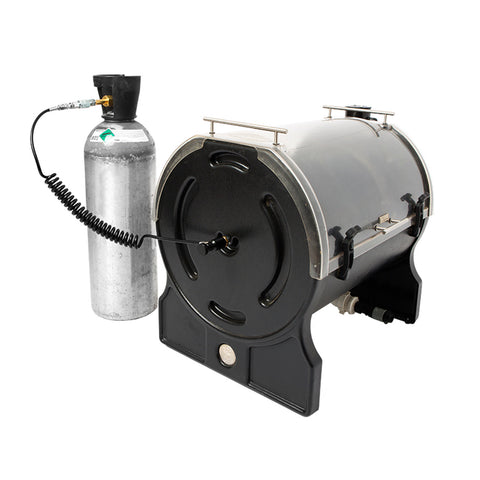
The CenturionPro wet and dry line also includes the Original at 50 lb wet/hr ($3,995) and the Silver Bullet at 50 lb wet/hr with 30% quieter operation ($4,495). Both sit between the Mini and the Gladiator for growers who outgrow the Mini before mid-scale pricing makes sense. The Resinator XL scales the OG's multifunction concept to 15 lb per separation run. For a dry-only budget option, the TTT 2600 handles bladeless trimming at $2,999, and the GreenBroz M Lite offers precision rolling blades with 316 stainless construction at $4,495. The CenturionPro Mini buying guide covers the wet/dry decision and the upgrade path from Tabletop to Mini for growers crossing the 10-plant threshold.
Best Bud Trimmer for Mid-Scale Operations (30 to 100 plants)
Operations processing 50 to 200 lb per harvest cycle need machines that run for hours without overheating and produce consistent leaf removal at volume. At this tier, build quality and included accessories (extra tumblers, kief collection bags, leaf collectors) make a significant difference in total cost of ownership. A machine that includes a second tumbler set means trimming continues during cleaning, which eliminates the hard ceiling on harvest-week throughput.


The Twister T2 ($19,571) is another strong mid-scale hybrid option that processes 35 lb wet and 11 lb dry per hour, with tandem and trim-saver system options for expanded workflows. GreenBroz also makes the M Lite at $4,495 for operations that need dry trimming at lower volumes with the same rolling-blade precision as the M1. For purely dry operations needing high volume at a lower price point, the Tom's Mighty Python at $19,999 offers industrial-grade bladeless dry trimming. The DBT vs hybrid wet/dry decision guide walks the workflow choice in detail for mid-scale operators committing to one or the other.
Best Bud Trimmer for Commercial Facilities (100+ plants)
Licensed producers and tonnage-scale facilities need chassis rated for continuous operation, hot-swappable components, and integration with conveyor systems between bucking, trimming, and curing. Downtime during harvest week costs real money at this scale, so reliability, parts availability, on-site service contracts, and cleaning speed become the deciding factors. Wet versus dry workflow becomes less of a debate at this tier because most LPs run both: hybrid chassis for daily volume and a dedicated dry-batch line for premium product.


For commercial trimming equipment at true tonnage scale, the CenturionPro XL family is in a class of its own. The XL family buying guide covers the XL5, XL5 SE, XL10, and XL MegaBucker in full detail, including facility planning checklists for conveyor infeed and outfeed integration, multi-shift duty cycles, and the decision point between stepping up from the 3.0+ Tandem versus going directly to an XL chassis. Mobius also offers the MD48 at $29,990 for dry-only commercial operations, and the TD25 at $5,995 sits as a mid-range dry trimmer option for facilities that want Mobius engineering at a smaller footprint.
What LP-scale operators say: On r/macrogrowery, operators comparing Twister and CenturionPro at the licensed-producer scale consistently raise the same trade-off. Twister's ecosystem (tandem chains, trim savers, conveyors) wins on full-line integration, while the CenturionPro DBT Model 5 wins on raw dry throughput per dollar. The deciding factor most growers cite is whether the operation is committed to a continuous-flow line (Twister) or batch-trim shifts (CenturionPro). Support and replacement-parts availability are described as comparable for both brands.
What Should I Look for in a Bud Trimmer?
Wet vs Dry vs Hybrid Workflow
Wet trimming is faster but can reduce terpene preservation because moisture-laden leaves carry more chlorophyll into the final product. Dry trimming retains more flavor and potency, lowers chlorophyll, and gives better control over moisture during cure. The trade-off is speed: dry throughput on the same chassis is typically 15 to 30% of the wet rating. Hybrid machines (Tabletop, Mini, Gladiator, 3.0+, Twister T2 through T6) handle either method by swapping tumblers or adjusting speed. Most growers in 2026 trend toward dry trimming for premium flower and reserve wet trimming for bulk material headed to extraction.
Throughput Capacity Sizing
Manufacturers rate capacity in pounds per hour on test material, which is usually mid-density, well-cured flower. Actual throughput varies with bud density, moisture content, and how aggressive the cut needs to be. Budget 20 to 30% headroom above your current peak need. If your harvest is 50 lb wet, a 50 lb/hr machine technically clears the harvest in one hour, but a 75 lb/hr chassis gives margin for dense indica strains, longer cycles, and a second tumbler swap.
Trichome Preservation
Bladeless tumblers (the Tom's Tumble Trimmer line, The Original Resinator) cause the least trichome damage because flower never contacts a cutting edge. Rolling-blade designs (GreenBroz M Lite and M1) are gentler than reciprocating cutting blades. Non-stick tumbler coatings (CenturionPro's Quantanium upgrade) reduce trichome adhesion to the tumbler interior by up to 40% on dry trim runs. For premium flower destined for jars rather than extraction, the bladeless or rolling-blade path is worth the throughput trade-off.
Expandability and Scaling
Some machines chain together for additive throughput (Twister T4 supports up to four units in tandem). Others step up through a single-chassis family (CenturionPro Mini, Original, Silver Bullet, Gladiator, 3.0+, Tandem, XL family). If you plan to scale within one or two seasons, factor in whether the machine grows with you or becomes a bottleneck. Buying an oversized machine to "grow into" usually costs more in capital and unused capacity than upgrading later.
Build Material and Hygiene
Stainless steel construction (especially 316-grade) is easier to sanitize and resists corrosion from plant resins. Electropolished finishes further reduce residue buildup. For operations in regulated markets (medical, GMP, cGMP), medical-grade stainless is often a compliance requirement and not a nice-to-have. The CenturionPro XL family buying guide contrasts the standard XL chassis against the SE electropolished-stainless variant if you are picking between coatings on a single platform.
Maintenance and Cleanup Speed
After every use, plan to deep-clean tumblers, blades, and contact surfaces. Isopropyl alcohol cuts resin effectively. Periodically inspect blade sharpness, belts, bearings, and kief filtration bags. Extra tumbler sets (included with the Gladiator, available as an upgrade on Mini and Tabletop) let trimming continue while cleaning happens, which eliminates a hard ceiling on harvest-week throughput. Tool-free disassembly is the single biggest cleanup-speed differentiator at the mid-scale tier.
Hybrid Wet/Dry vs Dry-Batch vs Bladeless: Which Workflow Wins?
The three workflow categories serve different priorities. Hybrid wet/dry is the right answer for growers who want one machine to handle both inputs, which describes most home, small, and mid-scale operations. Dedicated dry-batch (the CenturionPro DBT series) is the right answer when dry trimming is the only workflow that matters, when throughput-per-dollar on dry is the deciding metric, and when the operation has the room for a separate dry-trim cell. Bladeless tumblers are the right answer when trichome preservation is the only thing that matters and 20% extra leaf in the bag is an acceptable trade-off for zero blade contact.
Most multi-tier operations end up running a hybrid chassis (Gladiator or 3.0+) for daily wet-trim volume and either a DBT (Model 3 or higher) or a bladeless tumbler (Mighty Python) for the dry-trim line that produces their premium SKU. The deciding factor is not which workflow is "better" but which workflow matches the product the operation is built to sell.
Trimmer ROI Calculator
Estimate how quickly a machine trimmer pays for itself versus hand-trimming. Adjust the inputs below to match your operation, and the savings update instantly. A single hand trimmer processes roughly 1 to 2 lb per 8-hour shift at a labor cost of $150 to $250 per day. A $2,000 Tabletop Pro replaces 16 hand trimmers and processes 15 lb wet per hour. For a 50 lb harvest, the machine typically pays for itself within one or two harvest cycles in labor savings alone.
The savings scale with harvest volume. For operations processing 5+ lb per session, a CenturionPro trimmer handles wet or dry material at consistent speed. Smaller operations benefit from the Twister line of compact trimmers designed for 1 to 2 lb batches.
Related Guides
- CenturionPro brand pillar guide walks the entire lineup from Mini through XL family with a decision tree by harvest size.
- DBT vs hybrid wet/dry decision guide covers the workflow choice for buyers picking between dedicated dry-batch and hybrid chassis.
- Best hemp and cannabis buckers covers the bucker-plus-trimmer workflow that beats either machine alone at small and mid-scale.
- CenturionPro XL family buying guide covers the XL5, XL5 SE, XL10, and XL MegaBucker for tonnage-scale LP facilities.
- CenturionPro Tabletop buying guide covers the entry-level hybrid chassis in full variant detail.
Frequently Asked Questions
Are bud trimming machines worth it?
Yes for any operation processing more than 10 lb of harvest per cycle, and yes for almost any operation processing 5 lb or more if labor is paid at typical 2026 rates. A single hand trimmer clears roughly 1 to 2 lb per 8-hour shift, which puts a 10 lb harvest at 5 to 10 trimmer-days. A $2,000 Tabletop Pro clears the same 10 lb in under an hour and pays for itself within one or two harvest cycles on labor savings alone. The harder question is whether the machine matches the operation: oversized capacity wastes capital, and undersized capacity creates the harvest-week bottleneck the machine was supposed to eliminate. The ROI calculator above runs the math for any combination of harvest volume, crew rate, and machine cost.
How does a bud trimming machine work?
An automatic bud trimming machine feeds flower through a rotating tumbler that separates leaf material from the bud while a cutting mechanism (or, in bladeless designs, friction alone) removes the unwanted sugar leaves. On bladed machines, a fixed or reciprocating cutting reel sits below the tumbler: as flower rotates, leaves protrude through perforations in the tumbler wall and contact the blades, while the bud itself stays inside and tumbles past the cutting surface. Bladeless designs (Tom's Tumble Trimmer, The Original Resinator) use tumbling action alone, relying on friction between flower and tumbler wall to break leaves loose. Hybrid wet/dry machines accept either input by swapping tumbler hardware (different perforation sizes) or adjusting RPM. Output is a trimmed flower that drops through the tumbler perforations into a collection tray, with leaf and kief separated into auxiliary catchments.
What size bud trimmer do I need for 10 plants?
Ten plants typically yield 5 to 15 lb of wet material depending on strain and grow conditions. A home-tier hybrid like the CenturionPro Tabletop Pro (15 lb wet/hr) or a bladeless dry trimmer like the Tom's Tumble Trimmer 1900 (20 lb dry/hr) clears that volume in one to two hours. If scaling to 20 to 30 plants is planned within a season or two, the CenturionPro Mini (35 lb wet/hr) provides headroom without a major price jump. The DBT Model 0 is the right pick for home growers who dry-trim exclusively and want a dedicated dry-only chassis.
Is dry trimming better than wet trimming for bud quality?
Dry trimming generally produces higher-quality results. The slower process preserves more terpenes, lowers chlorophyll in the final product (smoother smoke), and gives better control over moisture during cure. The trade-off is speed: dry throughput is typically 15 to 30% of wet throughput on the same chassis. Most experienced growers in 2026 prefer dry trimming for premium flower and reserve wet trimming for bulk material headed to extraction or pre-rolls. The CenturionPro DBT series, GreenBroz M1, and Mighty Python are the high-throughput dry-only options.
Are bladeless trimmers gentler on trichomes than bladed trimmers?
Yes. Bladeless trimmers use a tumbling action alone to remove leaf material without direct blade contact, which preserves more trichomes on the bud surface. The Tom's Tumble Trimmer series and The Original Resinator use this approach. The trade-off is that bladeless trimmers only work on dry flower and may leave 15 to 25% more residual leaf than a bladed trimmer set to an aggressive cut. For premium SKUs destined for jars rather than extraction, the trichome retention is worth the extra leaf.
How much does an automatic bud trimmer cost in 2026?
Prices range from $499 for a hand-crank bladeless trimmer (Tom's Tumble Trimmer 1600) to over $250,000 for an industrial production line (CenturionPro XL10). For most home growers, $1,200 to $2,500 covers a capable machine. Small commercial operations typically invest $3,000 to $12,000. Mid-scale operations spend $7,000 to $20,000. Large commercial facilities budget $20,000 to $50,000 for flagship machines with full collection systems and conveyor integration.
Can I use one trimmer for both wet and dry material?
Yes. Hybrid wet/dry trimmers are designed for exactly this. CenturionPro and Twister both offer machines with swappable tumblers or built-in dual-mode operation. The CenturionPro line uses different tumbler coatings (electropolish for wet, Quantanium for dry). The Twister T4 and T6 come with tumblers that handle both methods out of the box. Expect dry throughput to be 15 to 30% of wet throughput on the same machine. Hybrid is the default for most home, small, and mid-scale operations because one chassis handles either workflow.
What maintenance does a bud trimming machine require?
After every use, deep-clean tumblers, blades, and contact surfaces. Isopropyl alcohol cuts resin effectively. Periodically, check blade sharpness or replace worn blades, inspect belts and bearings, clean kief filtration bags, and lubricate moving parts per the manufacturer's guidelines. Extra tumbler sets (included with the Gladiator, available as an upgrade on Mini and Tabletop) let trimming continue while cleaning happens, which eliminates downtime during long harvest days. Tool-free disassembly is the single biggest cleanup-speed differentiator at the mid-scale tier and above.
What is the ROI of an automatic trimmer vs hand trimming?
A single hand trimmer processes roughly 1 to 2 lb per 8-hour shift at a labor cost of $150 to $250 per day. A $2,000 machine like the CenturionPro Tabletop Pro replaces 16 hand trimmers and processes 15 lb wet per hour. For a 50 lb harvest, the machine pays for itself in one or two harvest cycles on labor savings alone. The ROI calculator above runs the math for your specific harvest volume, crew rate, and machine cost. Most home and small-scale buyers see payback within a single harvest. Mid-scale operations typically see payback in 2 to 4 harvests on a Gladiator-class machine.


