

ThinkGrow builds commercial LED grow lights around Samsung white-based full-spectrum diodes and native TrolMaster control, and backs every fixture with a 5-year warranty that ships replacement parts instead of forcing a full-fixture RMA. The current lineup splits into three families: the modular Model One system of swappable light bars, the standalone single-bar Model-I and Model-I Plus, and the high-output Model-H Plus built for flowering rooms. This review covers what each fixture does, who it suits, and how it ties into a TrolMaster-automated grow. My take after speccing these into both single tents and vertical rooms: you buy ThinkGrow for the TrolMaster automation and the modular bars, not for a headline PPF number, and that is the right reason to buy them.

What Is the ThinkGrow Model One System?
The Model One system is ThinkGrow's modular platform. Instead of one sealed fixture, you run individual light bars off a shared driver and add, remove, or re-space them as your canopy changes. Bars plug into a TLD-2 driver (two spectrum channels) or a TLD-4 driver (four spectrum channels), and a single driver can power several bars in a daisy chain. That modularity is the entire point, and it is what separates Model One from the older sealed panels.
 TLB-1
TLB-1 TLB-2
TLB-2 DR-1
DR-1 FR-1
FR-1I like this layout for rooms that change over time. You can start a tent with two bars over a small canopy and add bars as plants fill in, or pull a bar to re-space the array without rewiring the room. ThinkGrow's own reference vertical-flower layout pairs eight 90W bars overhead with two 120W ICL-300 inner-canopy bars for 960W across a single tier, which shows how far one driver setup scales.
Which Model One Light Bar Should You Choose?
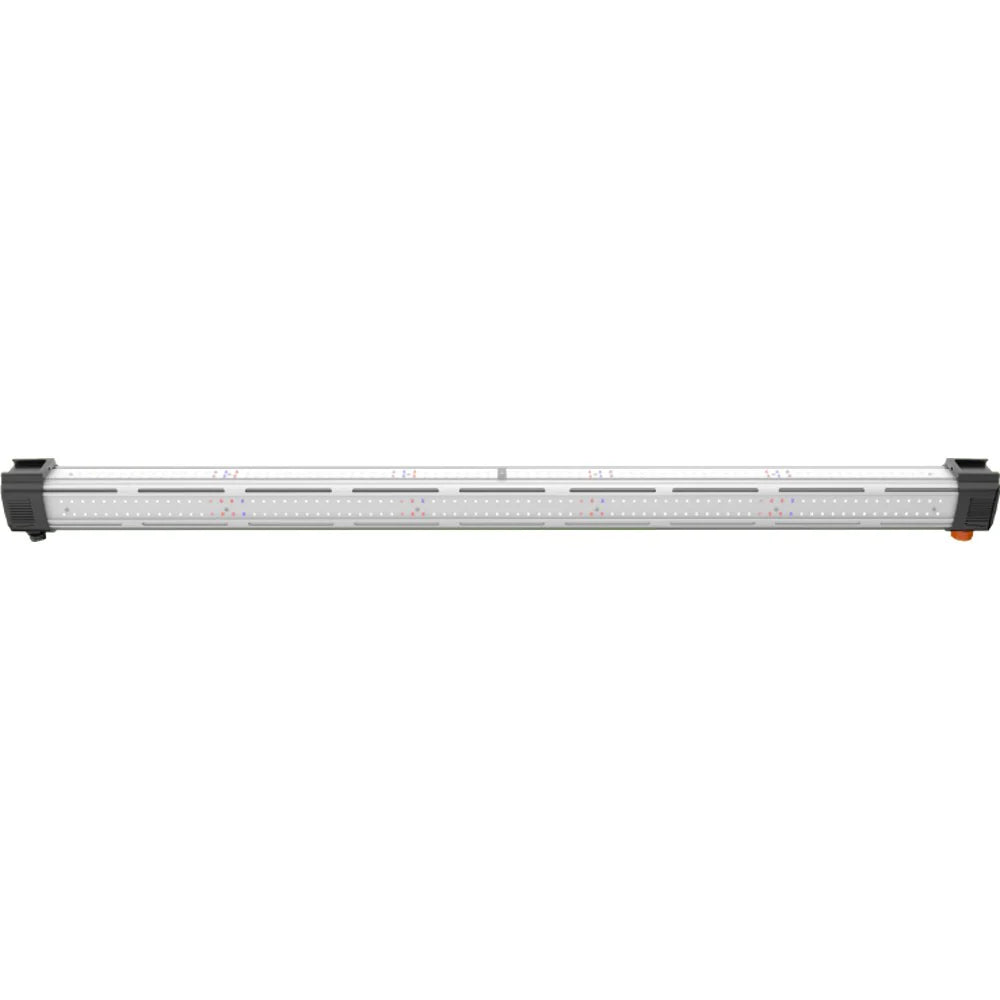
Every Model One bar shares the same modular mount and Samsung diodes, so the real choice comes down to length and spectrum. The TLB-1 is the 4-foot, four-channel full-spectrum bar and the natural starting point for most rooms, running roughly 90W per bar. The TLB-2 is the same bar stretched to 5 feet for longer bench rows.
The two specialty bars run two spectrum channels instead of four, trading the full mix for one targeted wavelength. The DR-1 adds a dedicated deep-red channel that weights the output toward bloom, while the FR-1 adds a far-red channel for photomorphogenic response and faster canopy development. If you do not plan to actively drive those wavelengths, the standard TLB bars are the smarter buy. The specialty bars earn their place only when you intend to tune deep-red or far-red deliberately through the controller. I have watched more growers buy DR-1 and FR-1 bars than ever program them, and an unused specialty channel is just an expensive full-spectrum bar.
How Does the ICL-300 Inner-Canopy Bar Work?
Overhead light only reaches the top of the canopy, which leaves lower bud sites underlit on tall or densely trained plants. The ICL-300 solves that by sitting inside the canopy. It is a 4-foot bar with diodes on three sides that emits light across roughly 300 degrees, so plants absorb light directly at mid-canopy rather than relying on what filters down from the top fixture.
Two practical notes from speccing these. The ICL-300 carries its own built-in 120W driver, so it runs as a self-contained unit rather than drawing from a shared TLD driver like the passive bars, and it pairs with the TSD-1 stand for height-adjustable placement and easy daisy-chaining between rows. Inner-canopy lighting pays off most in vertical racks and trellised flower. In a short tent with a thin canopy, the light has nowhere useful to go, and that budget is better spent on overhead coverage. I have pulled ICL-300 bars back out of short tents more than once, and the under-canopy lighting guide covers where they actually earn their keep.
How Do You Set Up Model One for Cloning, Veg, and Flower?
The payoff of a modular system is that one driver setup follows the crop through every stage. You add bars and raise intensity as the canopy builds, then layer in inner-canopy light once the plants stretch and the lower sites need their own source.


That is three configurations off the same drivers. For cloning and propagation, a single TLB-1 bar dimmed through the controller gives clones and seedlings gentle, even light without burning tender growth. For vegetative growth, run TLB-1 or TLB-2 full-spectrum bars at moderate intensity and add bars as the canopy fills out. For flowering, weight the spectrum toward bloom with DR-1 deep-red bars, ramp intensity for a CO2-enriched room, and drop ICL-300 bars into the canopy so lower bud sites get direct light. Scaled up, that flowering configuration is the 960W vertical layout in the setup table below.
How Do the Model-I, Model-I Plus, and Model-H Plus Compare?
Outside the Model One system, ThinkGrow still makes three sealed high-output fixtures, all rated at 720W. These make sense when you want one fixture per zone instead of a bar array to assemble and wire.
 Model-I
 Model-I Plus
 Model-H Plus
The Model-I is a single horizontal bar built for greenhouse and single-level rooms, with full spectrum plus UV and an individual far-red channel. The bar form factor spreads light evenly across long rectangular footprints where a square panel would leave hot spots. The Model-I Plus steps that up to four adjustable spectrum channels, unlocked through the TrolMaster Hydro-X Pro system, for growers who want full spectral control across a commercial array.
The Model-H Plus is the high-intensity flowering option: a 5-foot 720W fixture with a flower-weighted spectrum suited to a 5x5 footprint, and it shines in CO2-enriched rooms where the canopy can use the extra intensity. If you run sealed flower rooms above 1,000 ppm CO2, this is the fixture in the line I would steer you toward.

How Do ThinkGrow Lights Work with TrolMaster?
TrolMaster control is the throughline across the whole ThinkGrow line, and it is the strongest reason to choose these fixtures over a generic LED. The standalone fixtures connect to a TrolMaster Hydro-X controller through an adapter: the LMA-T bridges the controller's RJ12 bus to the ThinkGrow dimmer port for 0-10V intensity control, and the LMA-9 handles the digital protocol layer when you daisy-chain fixtures or run the digital bus.
Model One bars work a little differently. Their spectrum channels are managed at the TLD driver, and the LMA-G group adapter lets one controller dim and tune a whole group of bars at once instead of wiring each bar individually. Either way, you get automated sunrise and sunset ramps, DLI-based scheduling, and spectrum shifts by growth stage. The full wiring matrix is laid out in the TrolMaster ThinkGrow integration guide and the LMA adapter compatibility reference.
What ThinkGrow Setup Do You Need for Your Grow Size?
Here is how the range maps to common grow sizes, from a single tent to a stacked commercial tier. Match your space to a row, then use the decision matrix below to settle the modular-versus-standalone question.

Model One or a Standalone Fixture: Which Should You Choose?
The core decision is modular bars versus a sealed single fixture. This matrix lands you on the right one.
Whichever path you choose, budget for the matching TrolMaster adapter up front, because the automation is most of what sets these fixtures apart from a generic LED. The mistake I see most often is buying the fixture and skipping the adapter to save a little up front, then running a controllable light like a dumb one all season. To see how ThinkGrow stacks up against other brands by coverage tier, read the best LED grow lights guide.
Frequently Asked Questions
- What is the ThinkGrow Model One system?
- Model One is ThinkGrow's modular LED platform. Instead of a single sealed fixture, you run individual light bars (TLB-1, TLB-2, DR-1, FR-1) and the ICL-300 inner-canopy bar off a shared TLD-2 or TLD-4 driver, adding or re-spacing bars as your canopy changes. Every bar uses Samsung white-based full-spectrum diodes and is controlled through TrolMaster.
- What is the ICL-300 inner-canopy light used for?
- The ICL-300 is a 4-foot bar with diodes on three sides that emits light across roughly 300 degrees from inside the canopy. It raises PPFD at the mid and lower bud sites that overhead fixtures cannot reach, which matters most in tall or trellised flower and vertical racks. It has a built-in 120W driver and mounts on the TSD-1 stand for height adjustment.
- What is the difference between the ThinkGrow Model-I and Model-I Plus?
- Both are 720W single-bar fixtures for greenhouse and single-level rooms. The Model-I runs full spectrum with UV and an individual far-red channel. The Model-I Plus adds four adjustable spectrum channels, unlocked through the TrolMaster Hydro-X Pro system, for growers who want full spectral control across a commercial array.
- Can I control ThinkGrow lights with TrolMaster?
- Yes. The standalone Model-I, Model-I Plus, and Model-H Plus connect to a TrolMaster Hydro-X controller through the LMA-T adapter for 0-10V dimming, or the LMA-9 for the digital protocol. Model One bars are dimmed and spectrum-tuned at the TLD driver, with the LMA-G adapter providing group control across multiple bars from one controller.
- Are ThinkGrow LED grow lights DLC certified?
- ThinkGrow's commercial fixtures are built to the efficacy standards that DLC listing requires, which is what makes a fixture eligible for utility rebate programs. Because DLC QPL listings are updated by model and wattage, verify the current listing for your exact fixture before submitting a rebate application. The LED grow light rebate and DLC guide covers how to check.
- Does ThinkGrow use Samsung diodes?
- Yes. The Model One light bars and ThinkGrow's full-size fixtures use Samsung white-based full-spectrum diodes selected for horticultural output. ThinkGrow backs every fixture with a 5-year warranty and ships replacement parts directly rather than requiring you to return the whole fixture for an RMA.


