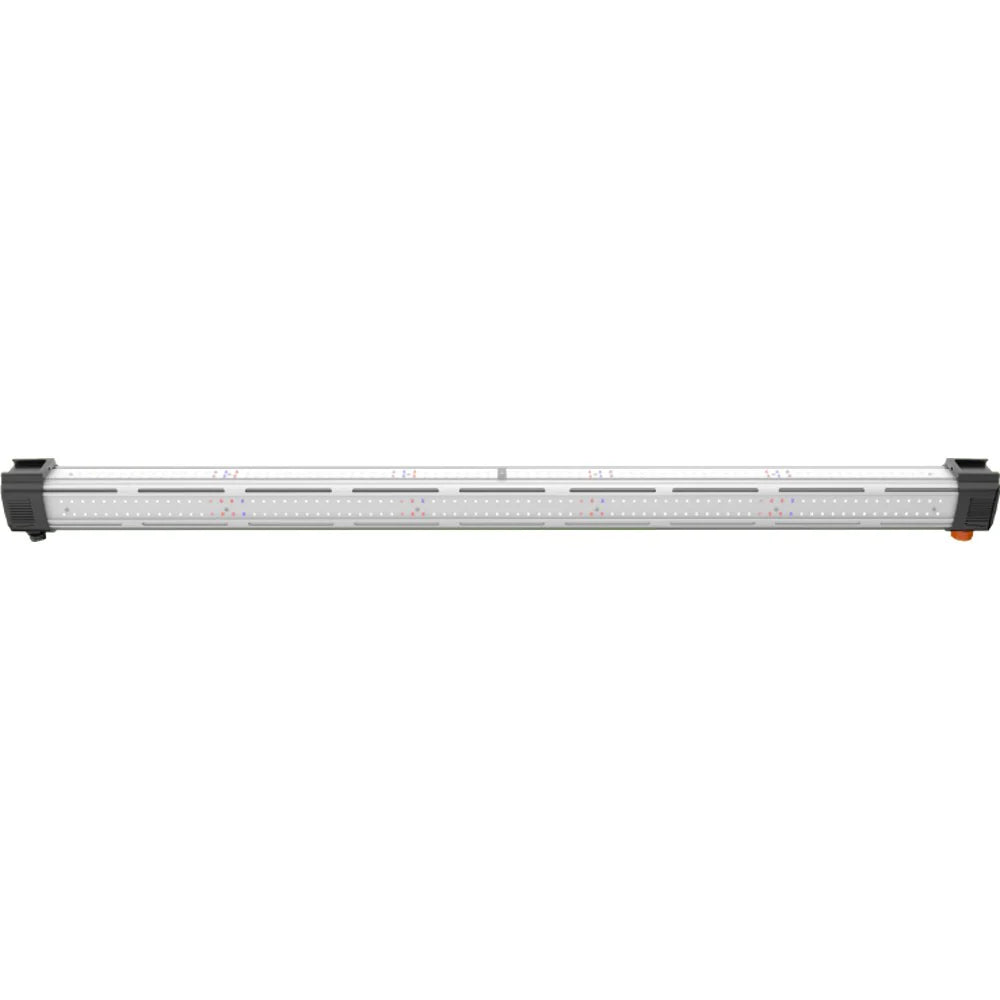
Under-Canopy vs. Inter-Canopy Lighting: Which Supplemental Setup Does Your Grow Need?
Derek Randal5 min read
Under-canopy lighting mounts beneath the foliage to boost light for lower buds, while inter-canopy setups weave light directly into the plant structure or rack rows. Most standard indoor grows see significant density gains by adding 120W of supplemental bar lighting at mid-plant height. Choose under-canopy for general tent setups or inter-canopy options for dense ScrOG and vertical racks.
The short answer: if your light hangs below the canopy and shines upward, it's under-canopy. If it goes inside the canopy structure itself (around the stem, through the ScrOG net, or between rack rows), it's inter-canopy. Both solve the same underlying problem (overhead LEDs leaving lower bud sites in the dark) but through different placement strategies. Which one you need depends entirely on how your plants are trained and how your room is built.
The Core Difference
Overhead grow lights deliver maximum photon density at the canopy surface, typically 12 to 18 inches below the fixture. Every node below that surface receives progressively less light as the overhead photons get absorbed and scattered by foliage. The lower third of a tall plant might run at 10 to 20% of the light intensity reaching the top.
Under-canopy and inter-canopy lighting both fix this, but from different angles:
Under-Canopy
Inter-Canopy
Placement
Hung below the canopy, outside the plant structure
Placed inside the canopy: around stems, through nets, between rack rows
Light direction
Upward, toward lower bud sites from a distance
Radial or horizontal, directly adjacent to target bud sites
Best grow styles
Most indoor grows: tents, flood tables, rows of potted plants
Dense ScrOG, large single plants, vertical commercial racks
Typical wattage
100-720W per zone
24-120W per plant or zone
Common formats
Bar lights, tube lights, multi-bar starter systems
Ring lights, compact bar lights, vertical side-lighting systems
When to Choose Under-Canopy Lighting
Under-canopy lighting is the right call for the majority of indoor grows. If you have 2-8 plants growing in a tent or room under a standard top-light, and your plants develop any substantial lower stem zone during flower, a set of bars below the canopy is the most straightforward way to add photons where they're needed. The hardware is simple: mount the bars horizontally at mid-plant height, run them on your existing photoperiod, and you're done.
I've seen growers running tight 4x4 setups gain noticeably denser lower buds just by adding 120W of red-enhanced supplemental bars. The effect is most pronounced on plants that stretch significantly during the first two weeks of flower. For those genetics, the lower quarter is essentially sitting in the dark.
Inter-canopy lighting earns its place in three specific scenarios: dense single-plant grows where the overhead can't reach through the canopy at all, ScrOG setups where the flat net shades everything below it, and commercial multi-tier vertical racks where each shelf's overhead light is too far from the row above it.
The defining characteristic of inter-canopy is proximity. A ring light wrapped around a stem is essentially touching the bud site. A bar light threaded through a ScrOG net sits 2-3 inches from the canopy nodes on the other side. That closeness means you can deliver adequate PPFD with much lower wattage than a bar positioned a foot below and angled up.
Dual purpose: clone propagation and inter-canopy supplemental use
Low wattage (under 100W) keeps clone zones cool
Full-spectrum output supports healthy root and early leaf development
The full range of ring lights, cube systems, and vertical rack fixtures is in
inter-canopy lighting.
Can You Run Both Together?
Yes, and in commercial operations this is common. A well-lit rack typically runs an overhead fixture at canopy level and under-canopy bars hanging below the net, while vertical racks use inter-canopy side-lighting between tiers. At the home-grow scale, the most frequent combination is an under-canopy bar set for the lower stem zone and a ring light or two for specific plants that have developed unusually tall or dense canopies.
The key is avoiding overlap that creates hot spots. If you're running both, keep wattage conservative on the inter-canopy side (24-48W per plant) and let the under-canopy bars handle broader zone coverage at higher wattage. Monitor temperature at the inter-canopy fixture and reposition if bud sites within 2 inches are running consistently above 80°F.
Frequently Asked Questions
What is the difference between under-canopy and inter-canopy lighting?
Under-canopy lights hang below the plant structure and shine upward toward lower bud sites from outside the plant. Inter-canopy lights are placed inside the canopy: around individual stems, through ScrOG nets, or between rows in a vertical rack. The key difference is proximity: inter-canopy lighting sits directly adjacent to the target bud sites rather than projecting from a distance below.
Which is better for a 4x4 tent: under-canopy or inter-canopy lighting?
For most 4x4 setups with 2-4 plants under a standard overhead LED, under-canopy bar lighting is simpler to install and covers more of the lower canopy with a single system. Inter-canopy lighting makes more sense if you're running a single large plant trained into a dense ScrOG, where the net itself is shading the interior. A 100-150W under-canopy bar is the right starting point for the average 4x4 tent.
Do under-canopy and inter-canopy lights use the same spectrum?
Both types are available in deep-red (660nm) and full-spectrum configurations. Deep red is most common for flowering-stage supplemental use because it targets bud development at lateral sites. Full-spectrum options work for vegetative rooms and clone zones. The placement style (under-canopy vs. inter-canopy) doesn't dictate the spectrum; both are available in the same spectral options.
Can supplemental lighting replace my main grow light?
No. Under-canopy and inter-canopy lights are supplemental. They run alongside a primary overhead fixture to fill light-deficient zones. Most supplemental systems deliver 150-300 µmol/m²/s in their target zone. Plants need 600-1000 µmol/m²/s at canopy level from the overhead light to drive productive yields. Supplemental lighting adds to that total; it doesn't replace the overhead.
What grow styles benefit most from inter-canopy lighting?
Inter-canopy lighting delivers the biggest gains in three scenarios: large single-plant grows over 3 feet tall in flower, ScrOG setups where the flat net shades everything below the training screen, and commercial multi-tier vertical racks where overhead fixtures can't reach between shelves. For standard multi-plant tent grows, under-canopy bar lighting is usually the more practical first step.
How do I know if my plants need supplemental lighting at all?
The most reliable indicator is bud site quality at harvest: if your lower nodes consistently produce underdeveloped, airy buds regardless of feeding and environment, light deficiency is the most likely cause. A PPFD meter placed at lower bud height during the light cycle tells you directly. Readings below 100-150 µmol/m²/s at mid-plant confirm that supplemental lighting will improve those sites. Readings of 300+ µmol/m²/s suggest the overhead is already penetrating adequately.
Derek RandalExpert Author
Lead Product Researcher & Writer
Derek leads Trimleaf's product research and editorial team, ensuring every guide, comparison, and spec sheet on this site is technically accurate and field-tested. CEA certified and a former contributor to Rosebud Magazine, he's spent years helping growers find the right equipment for their operation.