
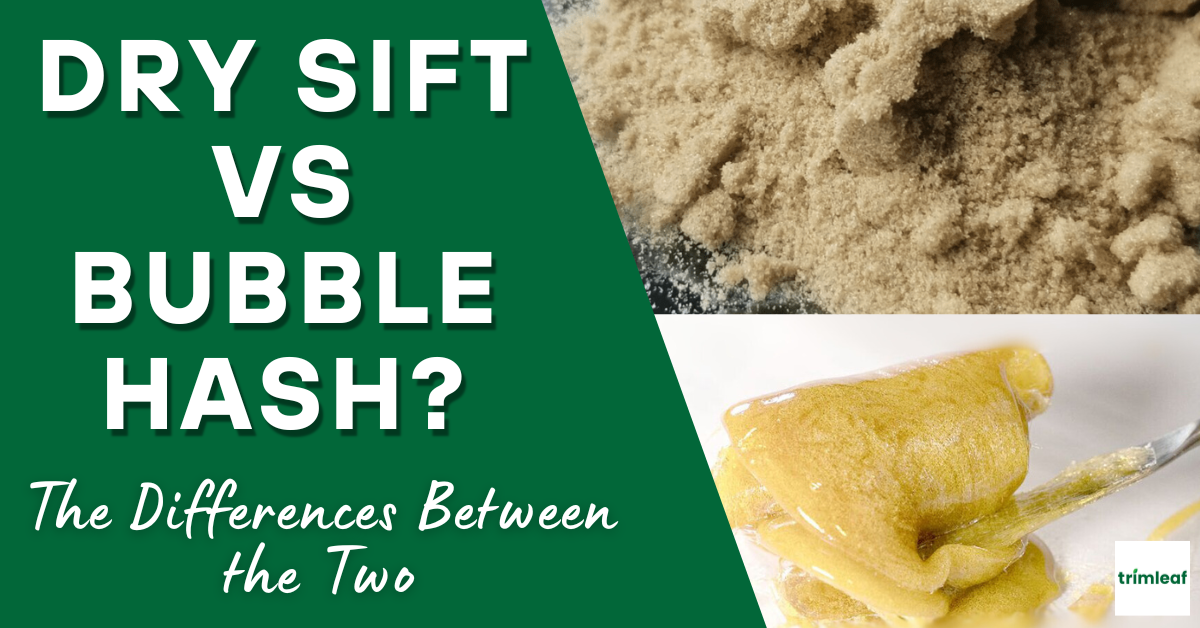
Solventless concentrates are always popular among cannabis fans.
They offer pure flavor without the need for chemicals to extract. Unlike concentrates that use solvents, products like dry sift and bubble hash rely on mechanical processes to separate the trichomes that hold the flavor and potency, resulting in a more natural product without the harshness of plant materials.
Dry sift and bubble hash are popular and similar because they don't use solvents to extract. However, there are real, measurable differences between the two concentrates in yield, equipment cost, time investment, and end quality.
Let's get into the specifics of each method.
What Is Dry Sift Hash?
Dry sift hash is a solventless concentrate made by mechanically separating trichomes from dried cannabis plant material using a series of fine-mesh screens. This process allows hash makers to collect resin glands while leaving behind unwanted plant material.
Effective dry sifting relies on the micron ratings of the screens. As trichomes come in different sizes, the finer the screen (lower micron rating), the purer the trichomes collected. A first-pass run through 120-160 micron screens typically yields 2-3 star material good for pressing. Refining that output through a 73 micron screen can push quality into 4-5 star territory.
Many growers and hash makers lean towards dry sifting because it works with any plant material, including trim. The sifted resin can be hand-pressed, sprinkled over flower to boost potency, or pressed into rosin. Unlike bubble hash, dry sift is ready to use right after sifting with no drying step required.

Benefits of Dry Sift
Terpene Preservation
No water contact means terpene losses are minimized, resulting in flavorful hash with a natural profile.
Easier to Store
Low moisture content from dried starting material reduces mold risk during storage.
Simple Setup
A set of mesh screens is all you need, making it a cost-efficient entry point for solventless extraction.

Problems with Dry Sift
Labor-Intensive Process
Requires time, patience, and precise technique to achieve quality results consistently.
Higher Risk of Contaminants
Plant material can mix into the final product if not carefully refined through progressively finer screens.
Additional Steps for Full-Melt Quality
Achieving full-melt potential requires extra refinement techniques like static separation.
Achieving Full-Melt Quality with Static Sift

One challenge with dry sift is reaching full-melt quality. Standard dry sift carries some plant material contamination that prevents it from melting completely when dabbed. Static sift addresses this directly.
Static sift (electrostatic separation) is a newer technique that uses static electricity to pull trichome heads away from plant material without introducing any water. Because resin heads and plant contaminants carry different electrostatic charges, a controlled charge can separate them after the initial screen run. The result can reach 4-5 star quality comparable to premium bubble hash, with none of the 24-48 hour drying period.
This approach is growing in popularity among solventless processors who want efficiency without the moisture risk. For fresh-start producers, it bridges the gap between basic dry sifting and the more involved ice water extraction workflow.
Two practical static refinement methods:
- Stretch a sheet of parchment paper over a hard edge and sweep it across the dry sift on a screen. Trichome heads are attracted to the parchment and lift away from plant matter.
- Lightly swirl the dry sift in a smooth, clean bowl. Trichome heads cling to the sides due to static attraction, leaving plant debris in the center.
For best results, perform static refinement in a cold environment (below 60°F). Cooler temperatures keep trichomes brittle and easier to separate. Pair this technique with a dry sift tumbler on the initial pass to maximize the starting quality before refining.
How to Make Dry Sift Hash (Quick Steps)
Dry sifting is beginner-friendly and requires minimal equipment. The key variables are temperature and screen size. Colder material produces more brittle trichomes that break off cleanly rather than smearing.
- Freeze your material for 24+ hours before sifting. Cold temperatures make trichomes brittle so they snap off the plant material cleanly rather than bending and dragging plant matter through the screen.
- Place the frozen material on a 120-160 micron screen set over a clean collection surface. Work in a cold room if possible.
- Gently card or tap the material across the screen using a card or soft brush. Avoid heavy pressure, which pushes plant material through along with trichomes.
- Collect the powder that falls through. This first-pass dry sift is 2-3 star quality, excellent for pressing into rosin or sprinkling on flower.
- For higher purity, run the collected sift through a 73 micron screen. This second pass separates smaller trichome heads from larger debris and pushes quality toward 4-5 star, near full-melt territory.
- Store in a cool, dark place in an airtight glass container. Dry sift is shelf-stable but degrades with heat and light exposure.
A dry sift tumbler automates steps 2-3 and dramatically increases throughput for larger runs. The ultimate guide to dry sift tumblers covers how to choose the right drum size and screen combination for your volume.
What Is Bubble Hash?
Bubble hash is a solventless cannabis concentrate made using an ice water bath to extract trichomes from plant material. Trichomes are denser than water and snap off the plant readily when agitated in freezing temperatures, making ice water extraction highly effective.
Extracting bubble hash involves three core steps:
- Agitating cannabis material in ice water to break trichomes free from the plant structure
- Filtering the mixture through bubble bags stacked from coarse to fine to separate trichomes by size
- Collecting and drying the hash either by air drying or freeze drying to prevent mold
Bubble hash is graded on a six-star rating system, with five- and six-star material being full-melt quality. The 73 micron and 90 micron bags consistently yield the premium grades. Fresh-frozen starting material produces the highest terpene content and is the standard for top-shelf live rosin production.

Benefits of Bubble Hash
Strong Flavor and Potency
Delivers rich terpene profiles and high potency, leaving minimal residue when dabbed at the right temperature.
Exceptional Purity
Water filtration removes plant material more thoroughly than dry screening alone, resulting in a cleaner concentrate.
Superior Full-Melt Potential
Multi-stage bag filtration consistently produces 5-6 star material at the 73 micron cut that fully melts when heated.

Cons of Bubble Hash
Requires Specialized Equipment
Needs bubble bags, an ice water bath or washing machine, a collection container, and a controlled drying space or freeze dryer.
Extended Drying Time
Must be thoroughly dried to prevent mold. Air drying takes 5-7 days; freeze drying cuts that to 24-48 hours.
Terpene Loss Risk
Over-agitation or warm water temperatures can strip valuable terpenes, affecting the flavor of the final product.
How to Make Bubble Hash (Quick Steps)
Bubble hash rewards careful technique. The two most common failure points are warm water (trichomes don't break off cleanly) and inadequate drying (mold ruins the batch). Both are straightforward to control.
- Fill a bubble hash washing machine or bucket with ice water, targeting 32-40°F. Maintaining temperature throughout the run is critical for trichome separation quality.
- Add your frozen plant material and agitate for 10-15 minutes. Fresh-frozen material produces the highest terpene retention; well-cured flower also works well for potency-focused runs.
- Drain through stacked bubble bags from coarsest (220 micron) to finest (25 micron). Each bag catches a different trichome size range. The 73 micron and 90 micron bags typically yield your highest-quality material.
- Collect the hash from each bag separately and label by micron size. The 73-90 micron cuts are your premium grades, best suited for dabbing or pressing into live rosin.
- Spread the wet hash on parchment and either freeze dry for 24-48 hours or air dry in a cold, dry room for 5-7 days. Thorough drying is non-negotiable. Even slight residual moisture creates mold risk in storage. A freeze dryer dramatically reduces drying time while preserving terpenes better than air drying.
- Once fully dry, store in glass jars in the freezer. Properly dried and stored bubble hash retains quality for months. For more detail on drying techniques, the guide on how to dry bubble hash covers both air and freeze drying methods in depth.
A dedicated bubble hash washing machine handles agitation more consistently than hand-stirring and reduces run time. Pair with quality bubble bags sized for your batch volume.
Dry Sift vs Bubble Hash: Side-by-Side Comparison
Here is how the two methods compare across the factors that matter most when choosing between them.

Micron Size Reference: Screen and Bag Selection
Micron size determines both quality grade and intended use. The table below maps screen or bag size to expected output quality for each method.
Dry Sift or Bubble Hash: Which Should You Choose?
Both methods produce quality solventless concentrates. The right choice depends on your starting material, time constraints, and target end use.
Choose Dry Sift if you:
- Want better terpene preservation and the most natural flavor profile from dried flower
- Prefer a process with no drying wait time, ready to use immediately after extraction
- Don't mind the extra refinement work to reach full-melt quality via static techniques
- Plan to sprinkle on flower, press into rosin, or make hand-rolled hash
- Are starting out and want a low-cost entry point into solventless extraction
Choose Bubble Hash if you:
- Want consistently cleaner, higher-purity output with less refinement effort
- Are targeting 5-6 star full-melt quality for dabbing or live rosin
- Have access to fresh-frozen material and a proper drying setup
- Don't mind the equipment investment and 24-72 hour drying window
- Want higher extraction yields from the same starting material weight
For a closer look at how bubble hash compares to another common byproduct of the sifting process, the bubble hash vs kief breakdown covers the key differences in quality, use case, and production approach.
Final Thoughts
Dry sift and bubble hash are both legitimate solventless extraction methods with distinct trade-offs. Dry sift is faster, cheaper, and beginner-friendly, yielding 5-10% from cured material in under two hours. Bubble hash takes longer and costs more to set up, but delivers 15-20% yield with consistently cleaner, full-melt capable output from fresh-frozen material.
The deciding factor is usually your workflow: how much time you have for drying, what starting material you're working with, and what you plan to do with the final product. For rosin pressing, both work well. For premium dabbing, bubble hash at the 73 micron cut is hard to match.
Explore dry sift tumblers for efficient screen extraction, or browse bubble hash washing machines and bubble bags to get your ice water setup dialed in.
Frequently Asked Questions About Dry Sift vs Bubble Hash
- What is dry sift hash?
- Dry sift hash is a solventless concentrate made by mechanically sifting trichomes from dried cannabis plant material through fine-mesh screens. No water or solvents are used. The result is ready to use immediately after sifting, with no drying time required.
- How does dry sift differ from bubble hash?
- Dry sift uses mesh screens to mechanically separate trichomes from dry plant material. Bubble hash uses an ice water bath and filtration bags to separate trichomes. Dry sift is faster and simpler; bubble hash produces higher yields and more consistently reaches full-melt quality.
- What yield can I expect from dry sift vs bubble hash?
- Dry sift typically yields 5-10% of starting material weight. Bubble hash typically yields 15-20%, though both figures vary based on material quality, technique, and equipment. Fresh-frozen starting material and proper agitation technique have the biggest impact on bubble hash yield.
- Which is more potent: dry sift or bubble hash?
- Bubble hash is typically more refined and more consistently reaches 5-6 star full-melt quality, which correlates with higher purity and potency. Dry sift can reach 4-5 star quality with static refinement, but requires extra steps to get there.
- What micron size produces the best bubble hash?
- The 73 micron bag consistently produces the highest-quality bubble hash, rated 5-6 star and capable of full melt. The 90-120 micron range yields 3-4 star material that works well for smoking or rosin pressing. The 220 micron bag is a work bag that catches plant material and is discarded.
- Why do people prefer bubble hash over dry sift?
- Bubble hash is generally purer because the water separation process removes plant material more effectively than dry screening alone. It consistently produces full-melt quality at the 73 micron cut and yields more per pound of starting material, making it the preferred method for premium dabbing and live rosin production.
- Does dry sift or bubble hash produce better rosin?
- Bubble hash typically produces better rosin yields and a cleaner product because it contains fewer plant contaminants. High-quality dry sift at the 73 micron refined cut can also press into excellent rosin, but achieving that purity level requires more refinement steps than bubble hash.
- Which method is easier for beginners?
- Dry sift is simpler and requires less equipment, making it more accessible for beginners. The main skill is maintaining cold temperatures during sifting. Bubble hash delivers higher quality with more effort, but the drying step adds complexity that requires attention to prevent mold.
- How long does it take to make bubble hash vs dry sift?
- Dry sift takes 30 minutes to 2 hours from start to usable product. Bubble hash takes 24-72 hours total when you factor in the mandatory drying period. A freeze dryer reduces bubble hash drying time to 24-48 hours and preserves terpenes better than air drying.
- How do I store dry sift and bubble hash?
- Both should be stored in airtight glass containers in a cool, dark place. For long-term storage, the freezer is ideal. Bubble hash must be completely dry before sealing or mold will develop. Dry sift is more forgiving given its low moisture content.


